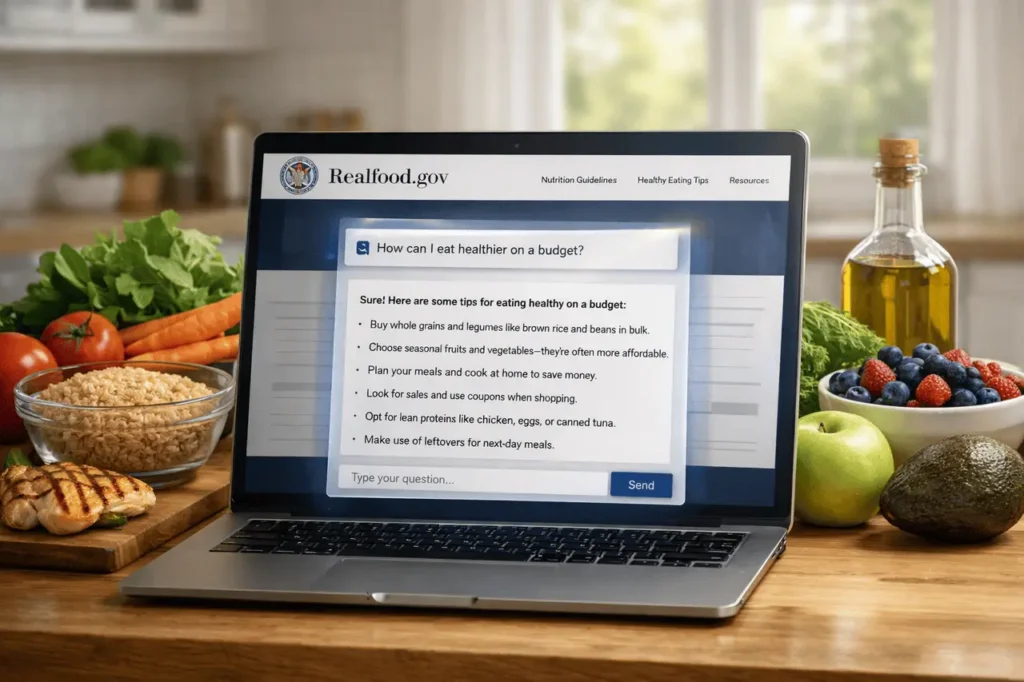
The U.S. federal government’s new nutrition platform, Realfood.gov, has quickly become the center of discussions about national dietary guidelines and the importance of artificial intelligence in public health. The central element of that discussion is the use of an AI chatbot, Grok, on the Website to answer nutrition questions conversationally. This article explains what Realfood.gov is, how Grok is used to interact with users on the site, why it’s important, and the issues that have arisen since its introduction.
At its core, Realfood.gov is the official web portal for the Dietary Guidelines for Americans, 2025-2030. It is the most recent set of federal nutrition guidelines from the U.S. Department of Health and Human Services and the U.S. Department of Agriculture. The guidelines, which are updated every five years as mandated by law, are designed to educate the public and federal nutrition programs about healthy eating practices supported by research-based nutrition.
What is Realfood.gov?
Realfood.gov is an official federal government website dedicated to distributing guidelines for the diet for 2025-2030. Guidelines to Americans. The guidelines provide scientifically supported recommendations on what and how individuals should eat to meet their nutritional needs, support healthy living, and help prevent diet-related illnesses.
The site focuses on taking a balanced diet of “real food” that is whole, nutritious food like vegetables, fruits, high-quality protein, whole grains, and healthy fats, and also limiting the consumption of processed foods, including refined carbohydrates and sugars added to foods.
Why Real Food Matters?
Consuming only whole, minimally processed food items is linked to greater overall health and a lower chance of developing chronic diseases such as heart disease, obesity, and diabetes.
The federal nutrition policy frames these diet patterns as essential to long-term health.
What is Grok AI Integrates with Realfood.gov?
Realfood.gov invites users to “Use AI to get real answers to questions about eating.” To accomplish this aim, the Website provides users with Grok, an AI chatbot developed by xAI and part of the X platform.
What does Grok Do on the Website?
- Grok answers users’ questions about diet, nutrition, and food selection.
- The chatbot provides answers in real time based on the conversational instructions.
- Themes range from meal planning to grocery budgeting to nutrition questions aligned with Dietary Guidelines themes.
Examples on the site ask how a family living on a budget can afford “real meals” and how to manage difficult eaters or situations, which Grok aims to address with specific solutions.
Current Implementation
At launch, Realfood.gov explicitly directed users to use Grok for nutrition advice. In later updates, the name “Grok” was removed from certain site text, and the term “AI ” was used instead, though the chatbot integration continues to send customers to the Grok platform for responses.
Dietary Guidelines: Core Themes
To fully comprehend the significance of the Grok’s use, it’s essential to be aware of the main guidelines in the Dietary Guidelines:
Key Nutrition Messages
- It is important to eat whole, high-quality meals such as dairy, protein, fruits, vegetables, whole grains, and healthy fats.
- Avoid highly processed foods and added sugars. Stay clear of packaged foods, sugary drinks, and refined carbs.
- Protein sources that balance the animal and plant-based proteins in a balanced diet regimen.
These guidelines maintain the long-standing federal emphasis on healthy eating practices while placing them in the context of current research and public health goals.
Benefits of AI integration to Nutrition Guidance
1. Increased Accessibility
AI applications like Grok can make food guidance more accessible and conversational, giving users immediate, customized solutions without having to read long documents.
2. Personalized Interaction
Instead of providing static advice, conversational AI interprets a user’s context and provides tailored answers for each question.
3. Educational Tool
For those who aren’t familiar with the terms used in nutrition or nutritional guidelines, AI can act as an entry point to learn about healthy eating habits.
Limitations and Concerns
Despite the potential benefits, some concerns have been raised in the context of the Grok connection:
Constance and Accuracy
Independent research has found that Grok’s answers sometimes don’t fully align with the federal guidelines. For example, in early tests, the AI provided outdated recommendations for protein or departed from official dietary guidelines.
Credibility in AI for Health Advice
Health experts warn against generative AI models, although beneficial for general information, they can lead to mistakes or cause confusion if not properly educated and supervised.
Public Confusion
The mixed messages in the official guidelines and AI responses can confuse consumers, particularly on topics such as protein requirements and fat content in food items.
Access Barriers
Users are often faced with limitations on AI interactions if they do not sign up for Grok accounts. This can limit their use of Realfood.gov.
Feature Comparison: Official Document vs AI Guidance
| Feature | Official Dietary Guidelines | Grok AI Chatbot Responses |
|---|---|---|
| Evidence Base | Scientific committee reports | Generated based on AI training data |
| Alignment | Official U.S. federal nutrition policy | Variable; sometimes divergent |
| Personalization | General recommendations | Conversational, can tailor to prompt |
| Accessibility | Readable guidelines and resources | Natural language interaction |
| Oversight | Developed by USDA/HHS experts | AI with limited health oversight |
My Final Thoughts: What does Realfood.gov represent?
Realfood.gov represents a significant change in how government officials communicate dietary guidelines, combining traditional advice with the latest AI tools. By focusing on “real foods” and incorporating responses from Grok conversations, the Website aims to connect with users wherever they are and offer easier-to-digest nutrition assistance.
In the same way, it highlights the importance of careful evaluation of AI in the context of public health. Although the AI component could increase engagement, it shouldn’t substitute for professional, scientific nutritional advice.
As technology advances and research progresses, the continuous development of AI tools and clearer connections between AI responses and official guidance are essential to ensure public trust and efficiency.
FAQs
1. What exactly is Realfood.gov?
Realfood.gov is the official U.S. government site for the 2025-2030 Dietary Guidelines for Americans and provides nutrition information and other resources for healthy eating habits.
2. Who invented Grok AI?
Grok is a generative AI chatbot created by xAI and is part of the X platform.
3. Can I trust Grok to provide medical nutrition advice?
AI may provide general information on nutrition and food, but it is not meant to replace advice from a dietitian or medical professional.
4. Are legal requirements for the Dietary Guidelines legally required?
Yes. Federal law requires that the Legislative Guidelines be updated every 5 years to keep pace with the latest scientific research.
5. What are the foods that the guidelines encourage?
The guidelines emphasize whole fruits and vegetables, high-quality protein, whole grains, and healthy fats. They also discourage processed foods laden with added sugars.
6. How often are guidelines updated?
Each five years by the USDA as well as the HHS.
Also Read –
Grok Imagine Image Model: Pareto-Optimal AI Image Generation